
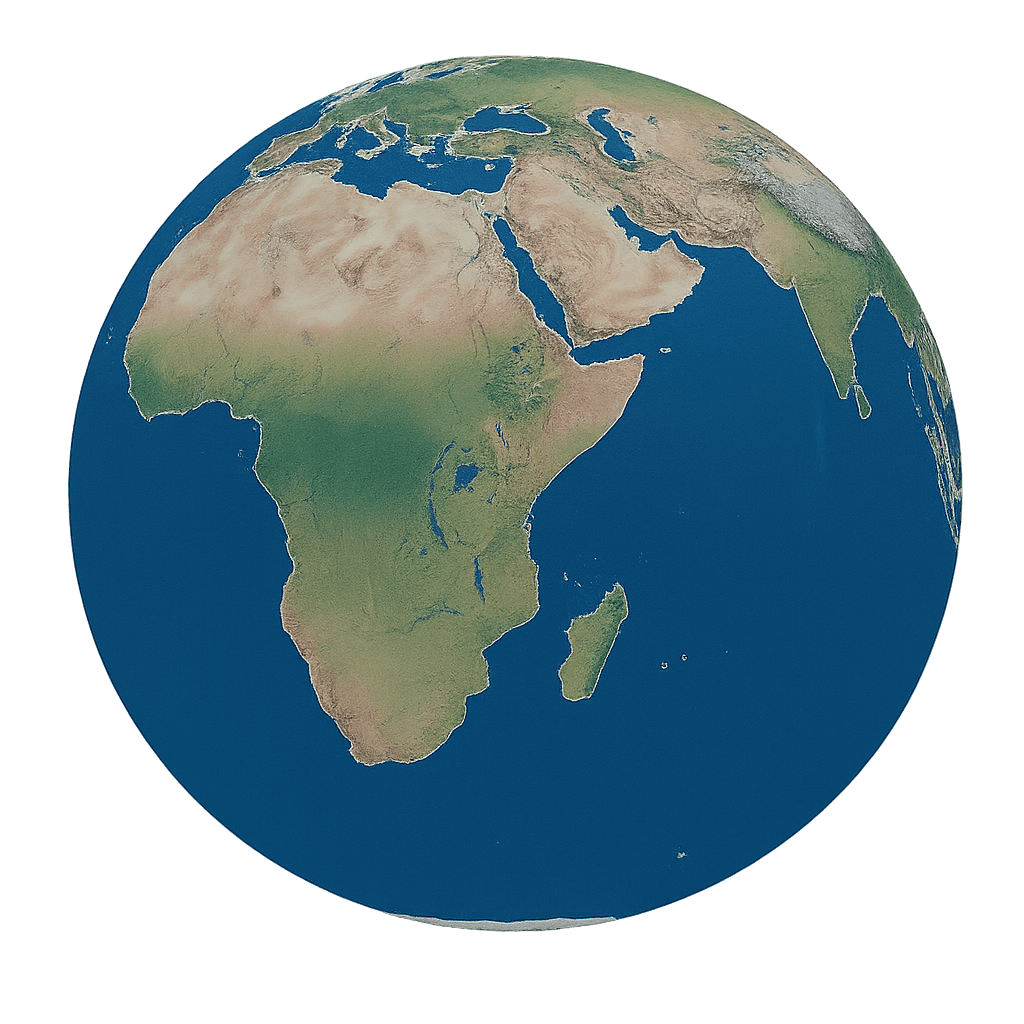
Madagascar Conservation: A long-term research team says the Malagasy government has granted protected area status to the Tsinjoarivo-Ambalaomby rainforest, helping curb burning and land clearing. Biodiversity Discovery: Scientists report seven new species of Madagascar’s elusive diamond frogs, using fieldwork, museum specimens, and DNA to strengthen conservation planning. Local Environment & Land Use: A new look at southwestern Madagascar highlights how traditional land management on the Mahafaly Plateau and Mikea Forest supports dry-forest resilience. AI & Labor (Madagascar link): A global study on “data workers” says AI depends on hidden human labor, including interviews conducted in Madagascar. Critical Minerals & Industry: U.S. moves to fund critical-minerals projects include rare-earth-free magnet development, tying into the wider mine-to-magnet push. Tech/Science Watch: Radio astronomy is shifting toward distributed, software-driven systems—raising demand for advanced computing and networking across Africa.
AGP Executive Report
Your go-to archive of top headlines, summarized for quick and easy reading.
Note: AI summary from news headlines; neutral sources weighted more to help reduce bias in the result. Feedback is welcome. Please let us know if you have any comments or suggestions about the AGP Executive Report.
AI Labor & Transparency: Sociologist Antonio Casilli says AI’s “secret ingredient” is a hidden workforce of data workers worldwide, including interviews from Madagascar, pushing a debate on fair recognition and worker rebalancing. Madagascar Conservation: A Madagascar rainforest protection win: NIU researchers say the Malagasy government granted protected area status to Tsinjoarivo-Ambalaomby after 26 years of field work, aiming to curb burning driven by poverty and limited alternatives. Biodiversity & Research Access: A new push highlights why African herbaria need faster digitisation—especially for Madagascar and nearby islands—so plant records become searchable and usable for conservation decisions. Local Tech & Telecom: Axian Telecom reports $980M revenue (+26.5%) and rising subscribers, with mobile money growth and expanded tower sites—useful signals for Madagascar’s connectivity ecosystem. Environment Watch: Community guidance continues after invasive hammerhead worms were spotted in Cambridge, with public tracking urged to protect soil biodiversity.
Invasive Species Watch: Rare Charitable Research Reserve staff in Cambridge, Ontario found about 15 hammerhead worms (Bipalium adventitium) in moist soil near the Grand River, warning they can threaten native soil invertebrates and urging public reporting. Conservation & Livelihoods: A long-term Madagascar rainforest protection win is highlighted after protected area status was granted to Tsinjoarivo-Ambalaomby, with researchers noting how poverty and limited alternatives drive forest burning. Biodiversity Research: Scientists report a hidden baobab species in Madagascar, adding to the island’s fast-growing catalog of unique plants. AI & Work in the Global South: Interviews and reporting spotlight how “data workers” in countries including Madagascar quietly power AI systems, often kept out of public view. Mining & Policy: A call is made for African governments to negotiate with global mining firms more strategically, using Rio Tinto’s Madagascar dispute as a cautionary example for future projects. Tech & Telecom Business: Malagasy-linked Axian Telecom posts strong revenue growth but profit falls, with subscriber and data-user growth driving momentum.
Conservation Finance & Blue Economy: On Tanzania’s Pemba Island, a sea cucumber ranching venture is trying to turn marine restoration into a real business—raising big questions about scale, fair profit-sharing, and long-term viability. Madagascar Rainforest Protection: A Malagasy protected area status for Tsinjoarivo-Ambalaomby is credited with helping save rainforest, after decades of field research and conservation work by a husband-wife science team. AI Labor in the Global South: New reporting highlights how “data workers” in places including Madagascar quietly power AI systems—often hidden by companies—fueling calls for recognition and better labor protections. Critical Minerals Push: The US announced about $3B for critical-minerals, battery and mining projects tied to national security and supply-chain resilience—an issue that will ripple into African mining negotiations. Biodiversity Knowledge Gaps: A push to digitise African herbaria (including Madagascar and nearby islands) aims to make plant records searchable online before more biodiversity is lost. Tech & Society: OpenAI says it blocked Russian-linked ChatGPT accounts used for covert propaganda, showing how generative AI can be weaponised.

Conservation Finance in Practice: On Tanzania’s Pemba Island, a sea cucumber ranching venture (Asili) is trying to turn marine restoration into a real business—raising big questions for the region on viability and fair profit-sharing. Madagascar Rainforest Protection: A Malagasy research team linked to NIU says the government granted protected status to the Tsinjoarivo-Ambalaomby area, a win for long-term field science and biodiversity. AI Labor in the Spotlight: Sociologist Antonio Casilli says AI depends on millions of hidden data workers worldwide, including interviews from Madagascar—pushing the debate from “automation” to human pay and rights. Critical Minerals Push: The US announced about $3B for critical-minerals and battery projects, including funding tied to new supply chains—relevant as Africa weighs mining deals. Biodiversity Data Access: A new push argues African herbaria must digitise plant collections faster, including Madagascar and nearby islands, so conservation decisions aren’t stuck on paper. Madagascar Science & Discovery: Researchers report a hidden baobab species in Madagascar, adding to the island’s ongoing biodiversity surprises. Mining Governance: A Pan-African Parliament leader urges African governments to negotiate with global miners as one bloc, citing Rio Tinto’s Madagascar dispute as a cautionary tale.
Madagascar Telecom & Finance: Axian Telecom (linked to Malagasy billionaire Hassanein Hiridjee) reported $980M profit over six months as revenue rose 26.5%, but quarterly net profit fell 29% to $33.2M amid fair-value swings and losses from Wananchi. AI & Labor in the Global South: Sociologist Antonio Casilli says AI depends on “purposely hidden” data workers, with his team interviewing 4,000 workers across 30+ countries including Madagascar—while another report spotlights Venezuela’s “platform extractivism” model. Conservation Policy: Long-term research helped the Malagasy government grant protected area status to the Tsinjoarivo-Ambalaomby rainforest, aiming to curb burning driven by poverty and rural pressure. Mining & Critical Minerals: Rio Tinto’s Madagascar dispute is being used as a warning for how African governments should negotiate with global mining giants as projects expand across the continent. Biodiversity Science: Digitising African herbarium collections is highlighted as urgent for faster access to biodiversity data—especially across Madagascar and the western Indian Ocean.
Madagascar’s graphite push: Evion Group says it has signed Maniry’s first binding graphite offtake, locking in at least 10,000tpa of concentrate for five years (about 26% of Stage 1 output), after permits and EU “Strategic Project” status. Biodiversity & conservation tech: A new study highlights “holistic hotspots” where low-cost natural forest regeneration can deliver both carbon and biodiversity gains, with Madagascar flagged among the best areas. Madagascar science discovery: Genetic work identifies a distinct baobab species in Madagascar (Adansonia bozy), which could reshape how threatened populations are conserved. AI & information security: OpenAI reports Russian-linked ChatGPT accounts were used to run a covert propaganda network across major platforms, including Telegram. Research access for plants: African herbaria are urged to digitise pressed specimen collections faster, so biodiversity data becomes searchable and usable for conservation decisions. Space/astronomy angle: Radio astronomy is shifting toward distributed, software-driven interferometric arrays, boosting demand for high-performance computing and advanced networking.
Biodiversity & Conservation: A new study maps where tropical forests can regrow naturally at low cost, with Madagascar flagged among “holistic hotspots” that combine strong carbon storage and biodiversity gains. AI & Influence Ops: OpenAI says Russian-linked operators used ChatGPT accounts to seed a covert propaganda network across major social platforms, including stolen content and tailored posts. Madagascar Science & Data Access: African herbaria are pushing to digitise pressed plant collections (including Madagascar and western Indian Ocean islands) so researchers and policymakers can actually use the records for conservation decisions. Wildlife Research: Genetic work identifies a distinct baobab species in Madagascar, which could reshape how threatened tree populations are protected. Tech & Critical Minerals (Madagascar): Evion Group signs Maniry’s first binding graphite offtake deal, locking in at least 10,000tpa for five years and boosting confidence in Madagascar’s graphite pipeline. Digital Rights: Amnesty warns children are missing from AI safety policymaking, even as governments and tech firms race to set “online safety” rules.
Madagascar Biodiversity & Research: Genetic work has identified a distinct baobab species in Madagascar (Adansonia bozy), reshaping how threatened populations may be classified and conserved. Conservation & Climate: A new Nature Ecology & Evolution study says low-cost natural forest regeneration could cut extinction risk and store major carbon over 30 years, with Madagascar flagged among the “holistic hotspots” where both benefits align. Critical Minerals (Madagascar): Evion Group says it has secured Maniry’s first binding graphite offtake deal—10,000tpa for five years—marking a key step for Madagascar’s graphite supply chain. Regional Tech & Governance: A report on Madagascar’s neighbors highlights the push for national interoperability infrastructure to make digital government work in practice. Global Context (Africa): A GDP-PPP ranking again places most of the world’s poorest countries in Africa, underscoring the pressure on development and tech access. Health & Science (Africa): WHO says polio transmission has been interrupted in five African countries, but surveillance and vaccination must continue.
Rare Earths & Investment: The US DFC pledged $62.8M to rare-earth projects across Malawi, Angola, Madagascar and South Africa, but Reuters notes private investors still stay cautious—highlighting how hard it is to move from mining to magnets and downstream processing. Graphite for Industry: Evion locked its first binding graphite offtake for Madagascar’s Maniry project—10,000tpa of concentrate for five years—about 26% of Stage 1 output, a key step for buyers and supply-chain confidence. Biodiversity Science (Madagascar): Genetic work identified a distinct baobab species in Madagascar (Adansonia bozy), which could reshape how threatened populations are conserved. Conservation & Climate: A Nature Ecology & Evolution study maps where natural tropical forest regeneration can deliver both carbon and biodiversity gains cheaply; Madagascar appears in the “holistic hotspots.” Public Health: WHO says five African countries, including Uganda, have stopped polio type 2 transmission after independent assessments—though surveillance and vaccination must continue. Digital Governance: Cameroon’s push for national interoperability infrastructure echoes a wider regional theme, with Madagascar also pursuing similar digital public infrastructure goals.
Public Health: WHO says polio type 2 transmission has been stopped in Burundi, Ghana, Guinea-Bissau, Congo and Uganda after independent assessments, but urges continued vaccination and surveillance. Biodiversity & Conservation: Genetic work by University of Wisconsin-Madison identifies a distinct Madagascar baobab species (Adansonia bozy), which could reshape how threatened populations are protected. Climate Tech & Land Restoration: A Nature Ecology & Evolution study finds natural tropical forest regeneration can be far cheaper than planting, with Madagascar flagged in “holistic hotspots” where carbon and biodiversity gains align. Critical Minerals & Industry: US DFC commits $62.8m to rare-earth projects including Madagascar, while reporting notes private investors remain cautious—highlighting the need for de-risking across the supply chain. Mining Governance: A Pan-African Parliament lawmaker argues Africa must renegotiate with global mining firms as Rio Tinto’s Madagascar dispute echoes across other countries. Digital Rights: Amnesty warns children’s online safety pledges lack real child input, pointing to gaps in emerging AI and child protection policies.
Graphite Deal for Madagascar: Evion Group says it has signed Maniry’s first binding graphite offtake, securing at least 10,000tpa of natural flake concentrate for five years with a German buyer—about 26% of Stage 1 output—after permits and EU “Strategic Project” recognition. Biodiversity Science in Madagascar: University of Wisconsin-Madison researchers report a hidden baobab species in Madagascar, naming Adansonia bozy as distinct from Adansonia za, which could reshape how threatened populations are conserved. Cheaper Tropical Forest Recovery: A new Nature study finds natural forest regeneration can deliver major carbon and biodiversity gains at up to 96% lower cost than planting, with Madagascar flagged among “holistic hotspots” where both benefits and lower costs align. Cyborg Underwater Insects: Scientists at Nanyang Technological University say they’ve developed a diving suit concept to let cyborg cockroaches operate underwater, pushing insect-robot control beyond land. Critical Minerals Push: The US DFC committed $62.8m to rare-earth projects including Madagascar, but private investors remain cautious as China dominates processing and pricing. Public Health Update: WHO confirms polio type 2 outbreak transmission has been interrupted in five African countries, including Uganda.
Rare Earths & U.S. Support: The U.S. is backing Madagascar’s Ampasindava rare-earth project with funding for pilot work and lab testing, as Washington tries to diversify critical minerals away from China. Conservation Science: Genetic research has identified a distinct baobab species in Madagascar (Adansonia bozy), which could shift how threatened populations are protected. Climate Restoration: A new study finds natural tropical forest regeneration can be far cheaper than planting while delivering major carbon and biodiversity gains, with Madagascar flagged among “holistic hotspots.” Public Health: WHO says polio type 2 transmission has been stopped in five African countries, including Uganda, after surveillance and lab reviews—another reminder that immunization and monitoring must continue. Digital Rights: Amnesty argues children are missing from AI safety policymaking, even as governments push “online safety” pledges. Bio-Inspired Robotics: Scientists report cyborg cockroaches can be controlled to operate underwater, pointing to new directions for small-scale exploration tech.
Madagascar Biodiversity: Genetic work by University of Wisconsin–Madison researchers has identified Adansonia bozy as a distinct baobab species in Madagascar, reshuffling conservation priorities for look-alike threatened populations. Climate & Restoration: A new study finds natural tropical forest regeneration can be up to 96% cheaper than planting, with Madagascar flagged among “holistic hotspots” where carbon and biodiversity gains align with lower restoration costs. Critical Minerals & Rare Earths: The U.S. backs Madagascar’s Ampasindava rare-earth project with pilot-plant and lab testing support, as Washington tries to diversify supply chains away from China. Health Tech & Public Health: WHO confirms polio type 2 outbreak transmission has been stopped in Burundi, Ghana, Guinea-Bissau, Congo and Uganda after targeted vaccination and stronger lab surveillance. Digital Governance (Regional): Cameroon pushes for national interoperability infrastructure to power digital government, a model Madagascar and other countries are also pursuing. Space for Science in Daily Life: Researchers report “cyborg” cockroaches controlled by electronics can now work underwater, pointing to new directions for small-scale robotics.
Rare Earth Push: The US International Development Finance Corp committed up to $4.84M to pilot work for Madagascar’s Ampasindava rare-earth project, aiming to diversify critical minerals away from China. Health Breakthrough: WHO confirmed polio type 2 outbreaks are closed in Burundi, Ghana, Guinea-Bissau, Republic of Congo and Uganda after assessments and targeted vaccination and surveillance. Nature & Climate: A new study in Nature Ecology & Evolution says natural tropical forest regeneration could be up to 96% cheaper than planting, with Madagascar flagged among “holistic hotspots” delivering strong carbon and biodiversity gains. Digital Governance: Cameroon is urging national interoperability infrastructure for digital government, and the discussion explicitly points to Madagascar as another country moving in the same direction. Tech for Water: An MIT professor-led startup showcased a tap filter (DetoXyFi) claiming 99.9% bacteria removal without electricity, targeting affordable drinking water. Conservation Tech: Scientists developed a diving suit so cyborg cockroaches can operate underwater, expanding the toolkit for small-scale robotics.
eFootball Spotlight: Ghana’s “Black Asteroids” secured a spot at the inaugural FIFAe Continental Championship Africa in Casablanca after grinding through the FIFAe Nations League, showing how esports is building new pathways for national teams. Forest Restoration: A new Nature Ecology & Evolution study finds natural tropical forest regeneration can be up to 96% cheaper than planting, with Madagascar flagged among “holistic hotspots” where carbon and biodiversity gains align with lower costs. Critical Minerals & Rare Earths: The U.S. is backing Madagascar’s Ampasindava rare-earth project with pilot funding, as Washington tries to diversify supply chains away from China. SADC Industrial Push: SADC leaders in Durban urged faster moves to stop exporting raw minerals and instead process them regionally to create jobs and investment. Health Tech & Public Health: WHO confirmed polio type 2 outbreaks are closed in five African countries, while new research highlights a global health workforce shortage that still leaves many countries—Madagascar included—thin on staff. Digital Government: Cameroon is pushing national interoperability infrastructure for digital public services, with Madagascar cited as also pursuing similar upgrades.
Critical Minerals & Rare Earths: The U.S. is backing Madagascar’s Ampasindava rare-earth project, with State Department-linked support for pilot plant work, lab testing, and environmental programmes—part of a push to reduce reliance on China-controlled supply chains. Regional Integration & Industry: At the 46th SADC summit in Durban, leaders renewed calls to stop exporting raw minerals and instead process them regionally, linking industrialisation to infrastructure, agriculture, and new technologies. Digital Government: Cameroon’s Internet Governance Forum 2026 urged building national interoperability infrastructure so digital public services can work across systems—an approach Madagascar is also pursuing. Health Tech & Public Health: WHO confirmed polio type 2 outbreaks are closed in Burundi, Ghana, Guinea-Bissau, Congo, and Uganda after targeted vaccination and stronger surveillance. Science & Innovation: Researchers developed an underwater suit to help cyborg cockroaches operate in water, showing how insect-based robotics can expand beyond land. Environment & Nature-Based Solutions: A new study argues natural forest regeneration can deliver major carbon and biodiversity gains and may be far cheaper than traditional tree planting.
Critical Minerals & US Support: The U.S. backs Madagascar’s Ampasindava rare-earths project with funding for pilot plant work, lab tests, and environmental programmes—part of Washington’s push to reduce reliance on China-controlled supply chains. Regional Industrial Push (SADC): SADC leaders meeting in Durban renewed calls to stop exporting raw minerals and agricultural goods and instead process them regionally, aiming to speed up integration and create jobs. Digital Government: Cameroon’s Internet Governance Forum urged building national interoperability infrastructure for digital public services, with Madagascar cited as also pursuing similar moves. Health Tech & Public Health: WHO confirmed polio type 2 outbreak closures in Burundi, Ghana, Guinea-Bissau, Congo, and Uganda after surveillance and targeted vaccination efforts. Bio/Robotics Research: Scientists developed an underwater diving suit to help cyborg cockroaches operate underwater, showing how insect-based robotics can expand into new environments. Conservation Science: Research highlights that natural forest regeneration can deliver major carbon and biodiversity gains at far lower cost than traditional tree planting. Gender & Development: Southern Africa’s expanded Gender and Development Index scored 58%, showing progress alongside rising pressure on women’s rights gains.
Deep-Sea Minerals: The U.S. and China are accelerating a race for deep-ocean minerals worth up to $16T, targeting seabed deposits like nodules, sulphides and crusts that feed critical clean-energy and defense supply chains. Digital Government: Cameroon pushes national interoperability for digital public services, a move Madagascar watchers will recognize as the next step beyond fragmented systems. SADC Industrial Push: At the Durban summit, leaders urged faster regional integration and a shift from exporting raw minerals to processing them locally—while Ramaphosa called for fewer border delays and stronger infrastructure. Madagascar Rare Earths: The U.S. backs Madagascar’s Ampasindava rare-earth project with pilot funding, aiming to diversify away from China-controlled supply chains. Satellite Connectivity: Airtel Africa and Starlink launched direct-to-phone satellite service in DR Congo, extending coverage using compatible smartphones. Health Tech & Access: WHO confirmed polio type 2 outbreaks ended in five African countries, and new research highlights major global health-worker shortages—Madagascar included. Bio-Inspired Robotics: Scientists developed an underwater “cyborg” cockroach diving suit, showing how insect control tech can reach places robots can’t.
US-Critical Minerals Push (Madagascar): The U.S. State Department says it’s backing Madagascar’s Ampasindava rare-earth project to reduce reliance on China, with the U.S. International Development Finance Corp committing funds for pilot work, lab testing, and environmental programmes. Regional Industry Drive (SADC): At the 46th SADC summit in Durban, leaders including President Cyril Ramaphosa urged faster regional integration and a shift away from exporting raw minerals toward local processing, value chains, and jobs. Trade Logistics Fix: Ramaphosa also called for “One-Stop Border Posts” so trucks don’t lose days at borders—an infrastructure and digital connectivity push that directly affects trade speed. Satellite Connectivity (DRC): Airtel Africa and Starlink launched direct-to-phone satellite service in the Democratic Republic of Congo, using compatible smartphones and sky visibility instead of satellite dishes. Public Health Milestone: WHO confirmed polio type 2 outbreaks are closed in Burundi, Ghana, Guinea-Bissau, Republic of Congo, and Uganda after targeted vaccination and surveillance. Health Workforce Gap: A Lancet study estimates 34.4 million more health workers are needed worldwide to reach moderate universal health coverage, with Madagascar among the lowest nurse densities. Tech for Water: An MIT professor-led startup in India, DetoXyFi, showcased an affordable tap filter claiming 99.9% bacteria removal without electricity or water waste. Bio-Inspired Robotics: Scientists at Nanyang Technological University developed a diving suit concept for cyborg cockroaches, aiming to control insect movement underwater.
Sign up for:
Tech Channel Madagascar
The daily local news briefing you can trust. Every day. Subscribe now.
Check Your Email!
We sent a one-time activation link to: .
Confirm it's you by clicking the email link.
If the email is not in your inbox, check spam or try again.
Welcome back!
is already signed up. Check your inbox for updates.